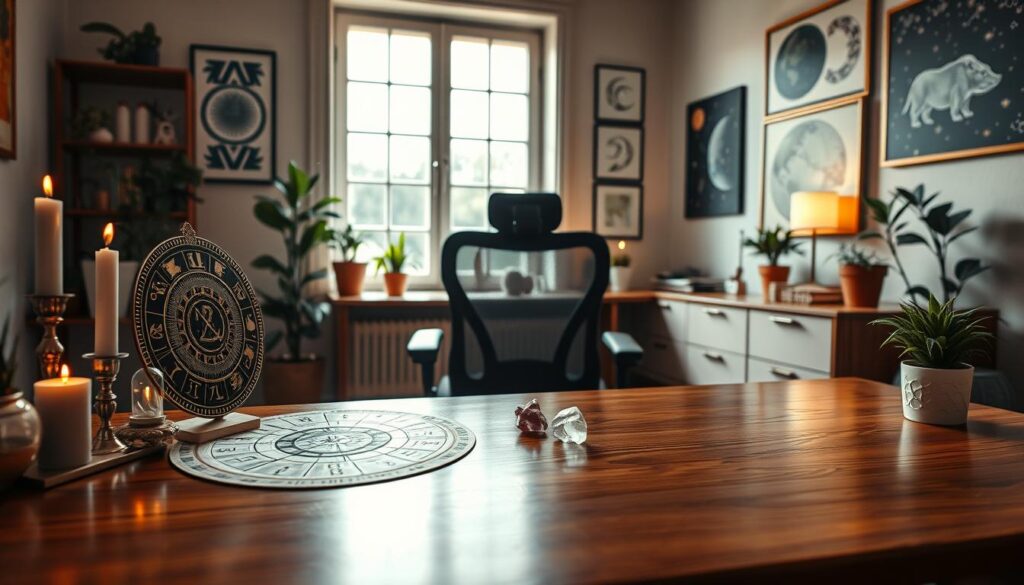
Imagine stepping into a workspace that shows off your personality and style. A place where you feel inspired and ready to take on any challenge. For many, the desk is more than furniture – it’s where creativity and productivity meet.
By adding MBTI and astrology-inspired touches, you can make your desk unique and useful. It will boost your productivity and spark your creativity. In this article, we’ll show you how to make your desk a true reflection of you.
Key Takeaways
- Discover how to personalize your workspace based on your MBTI personality type
- Explore the role of astrology in inspiring your desk design
- Learn how a styled desk can enhance your productivity and creativity
- Find out how to balance functionality with personal expression in your workspace
- Get tips on incorporating your zodiac sign into your workspace decor
Understanding Personality-Based Desk Styling
Personalizing your desk is more than just a decorative choice. It’s about creating an environment that matches your unique traits. A workspace that reflects your personality can boost your productivity and job happiness.
The Importance of Personalization in Workspaces
Personalizing your workspace is key. It lets you express your identity and make a comfortable work area. Research shows that a personalized workspace can make you happier and more productive at work.
Here are a few reasons why personalization matters:
- Increased Comfort: A personalized workspace can be tailored to your physical and emotional needs.
- Boosted Creativity: Surrounding yourself with items that inspire you can stimulate creativity.
- Improved Productivity: A well-organized and personalized workspace can help you stay focused.
How Personality Influences Workspace Choices
Your personality greatly influences your workspace design. For example, extroverts might like a lively and social workspace. Introverts might prefer a quieter, more secluded area.
| Personality Trait | Workspace Preference |
|---|---|
| Introverted | Quiet, private space with minimal distractions |
| Extroverted | Vibrant, social area with opportunities for interaction |
Overview of MBTI and Astrology in Design
The Myers-Briggs Type Indicator (MBTI) and astrology can guide your workspace design. MBTI sorts people into different personality types. Astrology links personality traits to celestial bodies.
Knowing your MBTI type or astrological sign can help you design your ideal workspace. For instance, some types might prefer structured environments, while others might do better in flexible spaces.
The MBTI Framework: An Overview
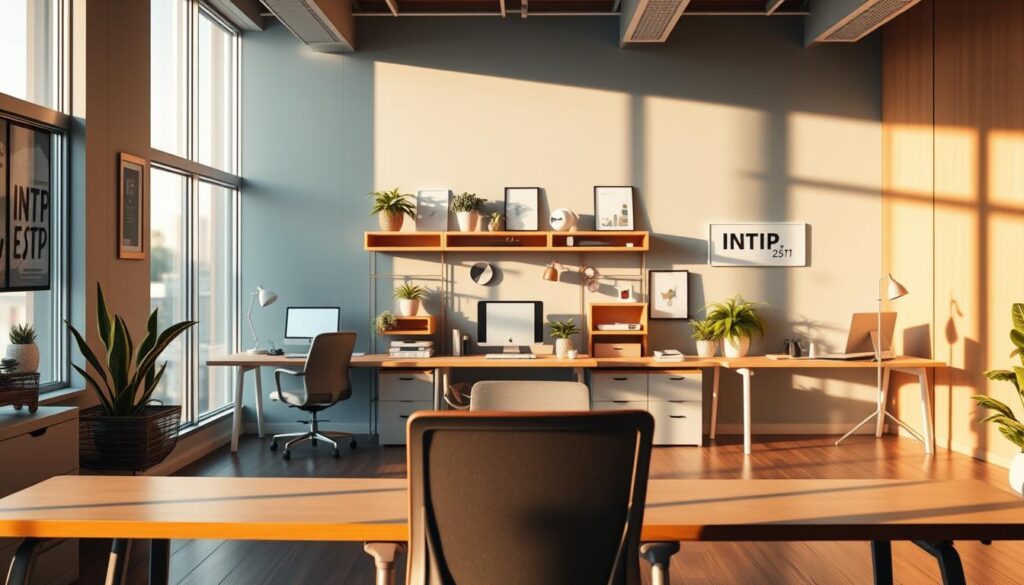
The MBTI framework shows how our personalities shape our workspace choices. The Myers-Briggs Type Indicator is a well-known tool for understanding personality types.
What is the Myers-Briggs Type Indicator?
The Myers-Briggs Type Indicator (MBTI) is a self-report questionnaire. It shows how people see the world and make choices. It’s based on Carl Jung’s theory of psychological types.
It helps people know if they are extraverted or introverted, sensing or intuitive, thinking or feeling, and judging or perceiving.
The 16 Personality Types Explained
The MBTI sorts people into 16 types based on four dimensions. These types are:
- ISTJ (Introverted, Sensing, Thinking, Judging)
- ISFJ (Introverted, Sensing, Feeling, Judging)
- INFJ (Introverted, Intuitive, Feeling, Judging)
- INTJ (Introverted, Intuitive, Thinking, Judging)
- ISTP (Introverted, Sensing, Thinking, Perceiving)
- ISFP (Introverted, Sensing, Feeling, Perceiving)
- INFP (Introverted, Intuitive, Feeling, Perceiving)
- INTP (Introverted, Intuitive, Thinking, Perceiving)
- ESTP (Extraverted, Sensing, Thinking, Perceiving)
- ESFP (Extraverted, Sensing, Feeling, Perceiving)
- ENFP (Extraverted, Intuitive, Feeling, Perceiving)
- ENTP (Extraverted, Intuitive, Thinking, Perceiving)
- ESTJ (Extraverted, Sensing, Thinking, Judging)
- ESFJ (Extraverted, Sensing, Feeling, Judging)
- ENFJ (Extraverted, Intuitive, Feeling, Judging)
- ENTJ (Extraverted, Intuitive, Thinking, Judging)
Knowing these types helps find the best workspace. For example, extraverts like being around people and may want a team space. Introverts might like quieter spots.
How MBTI Can Guide Desk Styling Decisions
Understanding your MBTI type helps in choosing your desk style. For instance, judging types like order and might pick a tidy desk. Perceiving types are flexible and might choose a more casual setup.
| MBTI Type | Desk Styling Preferences |
|---|---|
| Extraverted Types | Open, collaborative spaces with minimal clutter |
| Introverted Types | Quiet, private areas with organized storage |
| Sensing Types | Practical, ergonomic setups with attention to detail |
| Intuitive Types | Innovative, futuristic designs that inspire creativity |
Astrology and Workspaces: A Cosmic Connection
As we look to make our workspaces our own, astrology shines a light on our needs. It helps us design spaces that show who we are. These spaces can also boost our productivity and happiness.
Basic Principles of Astrology
Astrology says our birth stars and planets shape us. The zodiac wheel breaks down into twelve signs. Knowing these signs and traits is key to an astrology-inspired workspace.
Zodiac Signs and Their Traits
Each zodiac sign has its own vibe. For example, fire signs (Aries, Leo, Sagittarius) bring energy and passion. They need a lively, dynamic space.
Earth signs (Taurus, Virgo, Capricorn) crave stability and order. They do best in a solid, organized area.
Designing a Workspace Based on Astrological Signs
To design a personalized workspace based on your sign, think about your elements. Water signs (Cancer, Scorpio, Pisces) need calm and flow. Add water features or soft colors.
Air signs (Gemini, Libra, Aquarius) thrive in spaces that spark curiosity and socializing. Make your space intellectually stimulating and open.
Aligning your workspace with your zodiac sign can help you succeed. It supports your natural ways and boosts your success.
Crafting The Ideal Workspace for Each MBTI Type
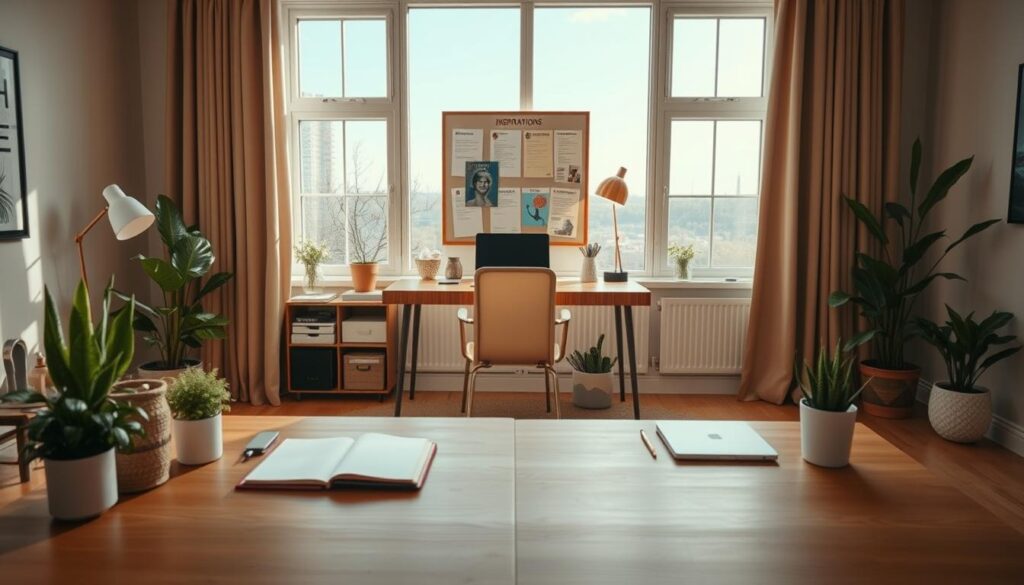
Your work style is shaped by your personality type. Tailoring your workspace to your MBTI can make you more efficient and happy at work. It’s important to understand your personality type to design a workspace that fits your needs.
Introverts vs. Extroverts: Desks for Different Energy Levels
Introverts need a quiet, private space to focus. They might use noise-cancelling headphones or a desk in a quiet area. Extroverts, on the other hand, do well in open, social spaces. Their desks should be near where people gather or have elements that encourage talking.
Intuitive vs. Sensing: Styling for Insight and Detail
Intuitive types do well in creative spaces with lots of ideas. Adding art, vision boards, or quotes can spark their imagination. Sensing types like a tidy, organized space. They use labeled storage and keep their area clean to stay productive.
Thinking vs. Feeling: Balancing Logic and Emotion
Thinkers need a workspace that’s logical and efficient. They like ergonomic furniture and tech that makes work easier. Feelers, however, want a space that feels welcoming. Adding personal items like photos or objects can make their space feel like home.
Judging vs. Perceiving: Structuring vs. Flexibility in Desks
Judging types like a space that’s organized and structured. They use planners and to-do lists to stay on track. Their desks have specific areas for different tasks. Perceiving types prefer a flexible space. They use movable furniture and decor that can change with their needs.
| MBTI Type | Ideal Workspace Characteristics |
|---|---|
| Introvert | Quiet, private, minimal distractions |
| Extrovert | Open, social, near communal areas |
| Intuitive | Inspirational, creative, broad views |
| Sensing | Structured, detailed, clutter-free |
| Thinking | Logical, efficient, ergonomic |
| Feeling | Harmonious, personal, welcoming |
| Judging | Structured, organized, task-oriented |
| Perceiving | Flexible, adaptable, multi-functional |
Astrology-Inspired Decor Ideas
Astrology gives us a special way to design our workspaces. It adds a touch of the stars and makes our spaces personal. By using astrology, we can make our work areas reflect who we are. This can also help us be more productive and creative.
Celestial Themes: Incorporating Star Charts
One cool way to add astrology to your workspace is with celestial themes. A star chart shows the stars at your birth. It’s a beautiful and meaningful decor piece.
- Use a large, framed star chart as a focal point on your wall.
- Incorporate constellations into your lighting design, such as string lights that mimic the patterns of your zodiac constellation.
- Add celestial-themed artwork or prints that resonate with your astrological sign.
Color Palettes Based on Zodiac Traits
Each zodiac sign has its own colors. Fire signs like Leo and Aries love bright colors like red and orange. Earth signs like Taurus and Virgo prefer natural colors like green and beige.
To pick a zodiac-inspired color palette:
- Find your zodiac sign and its element (earth, air, fire, or water).
- Choose colors that match your element and traits.
- Use these colors in your workspace with furniture, decor, and accessories.
Materials and Textures Corresponding to Zodiac Elements
The zodiac elements help pick materials and textures for your space. Earth signs like wood and stone, while air signs prefer glass and metal.
Here are some materials and textures for your zodiac sign:
| Zodiac Element | Recommended Materials/Textures |
|---|---|
| Earth | Wood, stone, clay, natural fibers |
| Air | Glass, metal, feathers, light fabrics |
| Fire | Metallic accents, bold textiles, bright ceramics |
| Water | Reflective surfaces, flowing fabrics, shells, water-inspired decor |
By using these astrology-inspired decor ideas, you can make a workspace that’s beautiful and personal. It will also match your astrological identity.
Creating an Inspiring Environment
Designing a workspace is more than just making it look good. It’s about creating a place that boosts creativity and productivity. A well-designed space can really help you stay motivated and improve your work.
The Role of Color Psychology in Desk Setup
Colors can change how we feel and focus. Choosing the right colors for your workspace can make you more productive and creative.
- Blue for calmness and focus.
- Green for balance and growth.
- Yellow for creativity and optimism.
- Red for energy and urgency.
Think about using these colors in your space with paint, furniture, or accessories.
Incorporating Plants and Natural Elements
Adding plants and natural elements to your workspace can lift your mood and productivity. Plants clean the air and lower stress.
- Choose low-maintenance plants like succulents or snake plants.
- Use natural materials like wood or bamboo in your furniture.
- Try a water feature or small fountain for a calming effect.
Personal Touches: Photos, Mementos, and More
Adding personal touches to your workspace makes it feel more welcoming and inspiring.
- Display family photos or inspirational quotes.
- Add mementos from travels or achievements.
- Include personal items that show your hobbies or interests.
By adding these personal touches, you can make a workspace that inspires creativity and feels truly yours.
Ergonomics Meets Personality
The ideal workspace combines comfort and efficiency. It should reflect your personal style while following ergonomic rules. We’ll look at how to find this balance. This includes understanding ergonomic basics, tailoring solutions for different personalities, and making a space that’s both comfy and useful.
Understanding Ergonomic Principles
Ergonomic rules help avoid fatigue and discomfort at work. This means having the right chair height, monitor placement, and keyboard setup. Ergonomic solutions are key to avoiding injuries and keeping good posture.
To apply these principles, try these tips:
- Adjust your chair so that your feet are flat on the floor or on a footrest.
- Position your monitor directly in front of you, at a distance of about 20-25 inches.
- Keep your keyboard and mouse close to your body to avoid reaching forward.
Tailoring Ergonomic Solutions to Personality Types
Everyone has their own workspace preferences. Introverts might like quiet, private areas, while extroverts prefer open spaces. Desk organization tips can change a lot based on your personality.
For example, judging types (from the MBTI) often like organized workspaces. Perceiving types, on the other hand, might prefer more flexible setups.
Creating Comfort and Functionality
Making a workspace both comfy and useful means thinking about what you need. Adding plants, artwork, or personal items can make it feel more like home.
To make your space great, consider these steps:
- Think about your work habits to figure out what your workspace needs.
- Use ergonomic furniture and accessories to support good posture and reduce eye strain.
- Add personal touches that show your personality and make the space welcoming.
Sustainable Desk Styling: A Growing Trend
Sustainable desk styling is more than a design choice. It’s a way to care for our planet that’s becoming more popular. As people learn about their impact on the environment, they want eco-friendly workspaces.
Eco-Friendly Materials for Personalization
Using eco-friendly materials is a big part of sustainable desk styling. These materials help the planet and make your workspace special. Some great options include:
- Recycled wood and plastic
- Bamboo and other sustainable woods
- Natural fibers like hemp and jute
- Low-VOC (Volatile Organic Compound) paints and finishes
Adding these materials to your desk makes it stylish and green.
The Connection Between Personality and Sustainability
There’s a strong link between a person’s personality and their love for the environment. For example, creative people often choose unique, green materials that show their innovative side.
Matching sustainability with personality makes workspaces better. For instance, someone who loves details might like the beauty of reclaimed wood. On the other hand, someone who’s outgoing might prefer bold, green colors.
Tips for an Eco-Conscious Workspace
Creating an eco-friendly workspace is more than just picking the right materials. Here are some extra tips:
- Choose energy-saving lights.
- Go digital instead of paper.
- Add plants for clean air.
- Look for second-hand or green furniture.
Following these tips helps make a workspace that shows your personality and helps the planet.
Budget-Friendly Ideas for Desk Styling
Personalizing your workspace doesn’t have to cost a lot. With a bit of creativity, you can make your desk show your style and boost your productivity.
Affordable Ways to Personalize Your Workspace
It’s easy to make your workspace unique without spending a lot. Here are some cheap ideas:
- Use items you already have, like family photos or favorite mugs, to add a personal touch.
- Shop during sales or use discount codes when purchasing office supplies.
- Opt for DIY decor projects that can be made with minimal investment.
Thrift and Upcycle: Finding Unique Decor
Thrift stores and online marketplaces are great for finding unique decor on a budget. Look for items that can be repurposed for your desk.
Some ideas include:
- Turning old jars into pen holders.
- Using vintage maps or prints to create a unique wall decor.
- Repurposing old furniture into functional desk organizers.
DIY Projects for Personality-Based Decor
DIY projects are a great way to add a personal touch to your desk. Here are some ideas for different personalities:
| Personality Type | DIY Project Idea |
|---|---|
| Creative | Customized art pieces using canvas and paint. |
| Organized | Desk organizers made from wooden crates or cardboard boxes. |
| Inspirational | Vision boards with motivational quotes and images. |
By using these budget-friendly ideas, you can make a desk that’s stylish and shows your personality.
Integrating Technology into Your Desk Design
As we mix work and personal life, adding tech to our desks is key. A good workspace with tech boosts productivity and comfort. It makes work better.
Smart Tech Solutions for Personalization
Smart tech is changing work by making it personal. It includes smart lamps and wireless charging pads. These make our workspaces better and more comfy.
Some smart tech solutions are:
- Smart lighting that changes with the day
- Desk organizers that keep things tidy
- Voice assistants for scheduling
Balancing Tech and Comfort: A User Perspective
Technology is vital for modern workspaces. But, we must also think about comfort. A space too focused on tech can feel cold.
To find a good balance, consider:
- Ergonomic furniture for long work hours
- Plants and natural elements for warmth
- Personal touches like photos or art
Future Trends in Tech-Enhanced Workspaces
The future of workspaces will be shaped by new tech like AI, IoT, and virtual reality. These will make workspaces better and more personal.
| Trend | Description | Impact |
|---|---|---|
| AI-powered workspaces | Workspaces that adapt to the user’s needs using AI | Enhanced productivity and efficiency |
| IoT-enabled devices | Devices that communicate with each other to create a seamless work experience | Increased convenience and reduced manual labor |
| Virtual Reality workspaces | Immersive environments for remote collaboration and work | Improved collaboration and engagement |
By using these trends and balancing tech with comfort, we can make workspaces inspiring. They will be functional and boost productivity.
Conclusion: Embracing Individuality in Workspace Design
Creating a workspace that shows your personality can really boost your productivity and happiness at work. By adding personal touches, you can make a space that encourages creativity and comfort.
Personalized Desks: A Key to Enhanced Productivity
A desk that reflects your personality, whether inspired by MBTI or astrology, can keep you on track. Knowing your personality type helps you design a space that fits your needs and likes.
Exploring New Dimensions of Workspace Styling
The modern workplace is changing, and so is how we design our spaces. Using MBTI and astrology in decor offers a new way to make workspaces unique and useful.
Future of Workspace Design
The future of workspaces will focus on being personal and unique. By mixing technology, green design, and personal touches, we can make spaces that are both beautiful and motivating.
FAQ
What is personality-based desk styling?
Personality-based desk styling is about making your workspace reflect who you are. It uses your MBTI type or astrological sign to boost your productivity and creativity.
How does MBTI influence desk styling decisions?
MBTI helps in designing your desk by showing your preferences. It tells if you’re more introverted or extroverted and how you make decisions. This helps in creating a workspace that fits you perfectly.
What role does astrology play in workspace design?
Astrology adds a unique touch to workspace design. It helps personalize your desk based on your zodiac sign and its traits. This makes your workspace truly yours.
How can I incorporate astrology-inspired decor into my workspace?
To add astrology-inspired decor, use celestial themes and colors from your zodiac sign. Choose materials and textures that match your zodiac element. This will make your workspace feel magical.
What are some budget-friendly ideas for desk styling?
You can style your desk on a budget by thrift shopping, upcycling, or doing DIY projects. These ideas let you add your personal touch without spending a lot.
How can I create a sustainable and eco-friendly workspace?
For a green workspace, use eco-friendly materials and reduce waste. Add elements that show your love for nature and sustainability. This makes your workspace better for the planet.
What is the importance of ergonomics in workspace design?
Ergonomics is key for a comfortable and functional workspace. It ensures your workspace meets your needs, boosting productivity and preventing injuries.
How can I balance technology and comfort in my workspace?
To balance tech and comfort, choose smart tech that helps you work better. Make sure your workspace is still cozy and ergonomic. This way, you stay productive and comfortable.
What are some tips for organizing my desk?
Organize your desk with a system, use storage solutions, and keep it clutter-free. A tidy workspace helps you focus and be more productive.
How can I make my workspace more inspiring?
To inspire your workspace, add colors, plants, and personal touches. These elements reflect your personality and style. They create a space that encourages creativity and motivation.