Choosing best Wall Art Sizes Based on Room Dimensions. Ever struggled to pick the right wall art size for your room? It’s a common problem many face when aiming for a stunning and stylish space.
Finding the perfect wall art size can really change how your room looks and feels. The right piece can make your space feel welcoming and balanced.
To pick the right size, you need to know how to measure your room dimensions. In this article, we’ll show you how to make a smart choice and improve your living area.
Key Takeaways-Choosing best Wall Art Sizes Based on Room Dimensions
- Understand the importance of choosing the right wall art size for your room.
- Learn how to measure your room dimensions to select the perfect wall art size.
- Discover guidelines for selecting wall art sizes for different room types.
- Explore tips for creating a harmonious and inviting living space.
- Find out how to balance wall art size with other decorative elements in the room.
Understanding the Importance of Wall Art Size
Wall art size is key to a room’s look. The size of the art can make or break the room’s style.
The Impact of Scale on Room Aesthetics
The size of wall art greatly affects the room’s feel. A big piece can be a strong statement, grabbing attention. A smaller piece can add a soft touch, blending with other decor.
Scale and proportion are very important when picking wall art. A piece too big can make a room feel tight. A piece too small can get lost. Finding the right size is essential for a balanced look.
How Size Influences Visual Balance
The size of wall art also impacts the room’s balance. A well-chosen piece can bring everything together, creating a unified look. But the wrong size can throw off this balance, causing a messy feel.
To get a balanced look, think about the room’s size and the art’s size compared to furniture and decor. A balanced composition helps the eye move smoothly through the room, creating harmony.
Knowing how wall art size affects a room’s look and balance helps homeowners choose better. This can greatly improve their living spaces.
Measuring Your Space for Art Placement
To create a stunning visual impact, accurately measuring your space is key before picking wall art. This ensures the art fits your room well, boosting its look.
Measuring isn’t just about wall sizes; it’s about how room elements work together. Accurate measurements guide you in choosing the right wall art size and where to place it.
Key Measurements to Take
When measuring, focus on a few important dimensions:
- The height of your walls
- The width of the area for your art
- The height of nearby furniture or elements
Understanding Wall Heights and Widths
The size of your wall is key for choosing the right art size. A big piece on a small wall can feel too much. A small piece on a big wall might get lost. Think about the scale and proportion of your art and wall.
Tools for Accurate Measurements
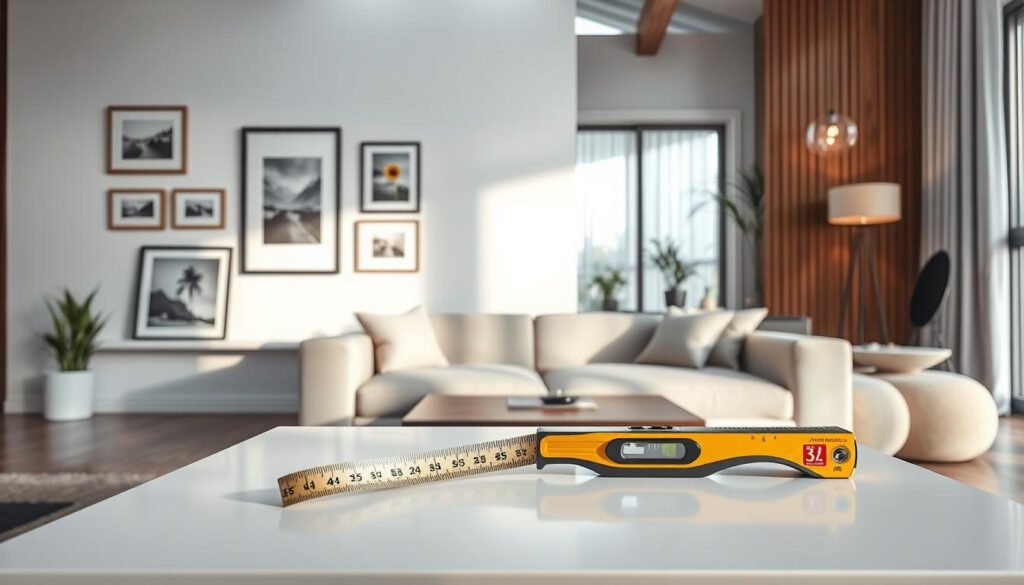
For precise measurements, you’ll need the right tools. A tape measure is a must for wall and art space dimensions. For tricky spaces, a laser measure can be very helpful.
By carefully measuring your space, you can find the perfect wall art. It should not only fit but also improve your room’s feel. The aim is to achieve a harmonious balance between your art and space.
Guidelines for Selecting Art Sizes
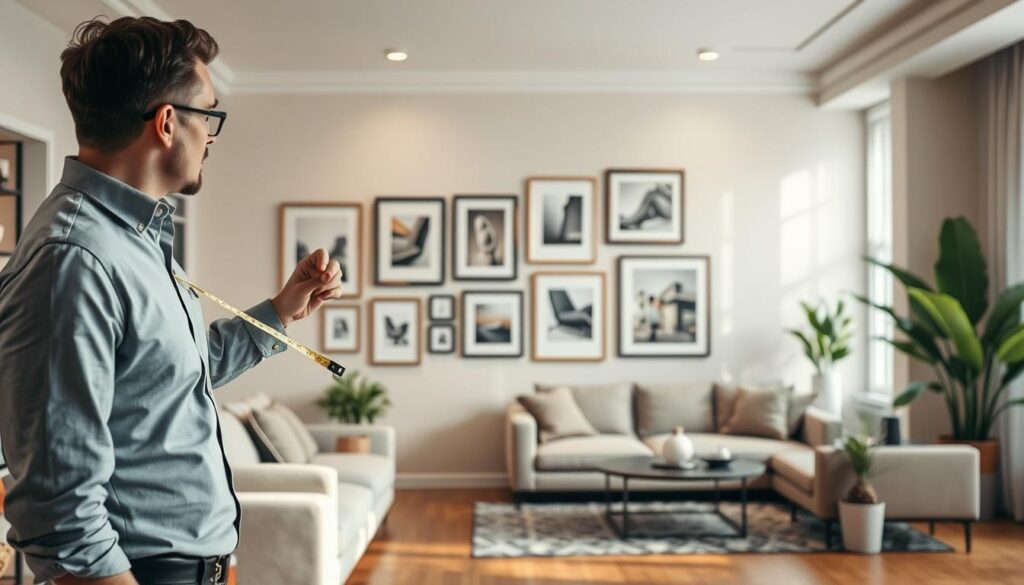
The secret to a beautiful room is choosing wall art that fits right. It’s key to think about the room’s size when picking art. This way, the art will look good without taking over the space.
General Sizing Rules for Different Rooms – Choosing Wall Art Sizes Based on Room Dimensions
Every room is different when it comes to art size. For example, a big art piece can be perfect in a large living room. But, smaller, more delicate art might be better for a cozy bedroom.
- Living Room: Pick a big art piece or a few smaller ones that cover 60-70% of the wall.
- Bedroom: Go for art that’s the right size for your furniture, like above a bed or dresser.
- Dining Room: Choose art that matches your dining table and chairs, often a big piece or a gallery wall.
Creating a Focal Point in Larger Spaces
In big rooms, a focal point with wall art can really make the space pop. A big, eye-catching art piece or a well-arranged gallery wall can be a stunning centerpiece.
Tips for creating a focal point:
- Find a statement piece that grabs your attention.
- Make sure the art’s colors match the room’s decor.
- Try out different layouts until you find one that looks right.
By using these tips, homeowners can pick the right wall art. This ensures their rooms look great and feel welcoming.
Popular Wall Art Layouts and Sizes
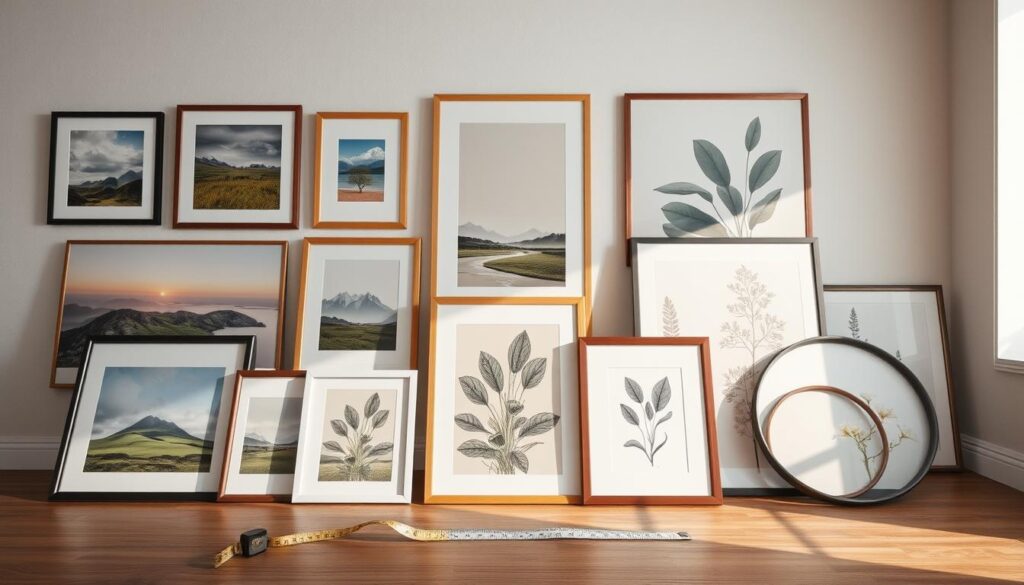
The right wall art layout and size can turn a plain wall into a stunning centerpiece. Understanding different layouts and sizes helps you create a space that shows off your style.
Gallery Wall Configurations
Gallery walls feature many art pieces or frames arranged like a collage on one wall. This style lets you get creative, mixing frame styles, sizes, and shapes.
To make a cohesive gallery wall, keep these tips in mind:
- Choose a theme, like a color scheme or frame style, to connect the pieces.
- Balance the layout by spreading out the frames and art.
- Try out different layouts on the floor or with a digital tool before hanging them.
Single Piece Statements
A single piece of wall art can be as striking as a gallery wall. Pick a piece that stands out, considering its size and the room’s scale.
In big rooms, a large, bold piece works well. For smaller spaces, a detailed, smaller piece might be better.
Utilizing Frames and Matting
Frames and matting do more than hold your art; they add to its beauty. The right frame can match the artwork, and matting can add depth.
Think about the frame and matting’s style and color. For example, a modern art piece might need a sleek frame, while traditional art could look great with ornate frames and matting.
| Layout Type | Description | Best For |
|---|---|---|
| Gallery Wall | Multiple pieces arranged in a collage | Creating a focal point, showing off many art pieces |
| Single Piece | A standalone art piece | Large, bold statements or detailed, smaller pieces |
| Framed with Matting | Artwork framed with additional matting | Adding depth, complementing traditional or modern décor |
Tips for Personalizing Your Wall Art Choices
Personalizing your wall art can make your home feel truly unique. Mixing different sizes of art pieces adds visual interest. This approach also lets you show off various styles and themes.
Mixing and Matching Sizes
When choosing Room Size Wall Art, balance is key. Pairing a large piece with smaller art creates a stunning focal point. This works well in any room.
Reflecting Personal Style
Wall Art Sizing Tips say your art should match your style and décor. Think about the colors and look you want. For example, a minimalist space might need big, simple pieces. An eclectic space can handle a mix of sizes and styles.
Harmonizing with Existing Décor
To make your wall art enhance your space, measure your walls first. Choose art that fits your room’s scale. This creates a balanced look that’s stylish and welcoming.
FAQ
What is the best way to determine the ideal wall art size for my room?
To find the perfect wall art size, start by measuring the wall where you want to hang it. Think about the height and width. Use a level and pencil to mark the spot.
Next, cut a piece of paper or cardboard to the size you’re thinking of. This will help you see how it looks in the space.
How do I choose the right wall art size for a large living room?
In a big living room, a big piece of art or a group of pieces can be amazing. Look for something at least 24 inches wide and 36 inches tall. Or, try a gallery wall with several pieces.
What are some general guidelines for selecting art sizes for different rooms?
In bedrooms, a small piece (12-18 inches wide) works well. But, living rooms and dining rooms can handle bigger pieces (24-40 inches wide or more). Think about the room’s size and your furniture when picking.
How can I create a visually appealing gallery wall?
To make a great gallery wall, mix frame styles, shapes, and sizes. Pick a common theme or frame color to start. Then, balance it with big and small pieces.
What are some tips for combining different wall art sizes and styles?
When mixing art sizes and styles, think about the look you want. Use different frames and matting for depth. Balance big pieces with small ones. Feel free to try different setups until you find one you like.
How can I ensure my wall art is proportional to my furniture?
To match your wall art with your furniture, think about the furniture’s size and scale. A big piece of art looks great with a large sofa or sectionals. But, a small piece might be better for a small chair or side table.
What are some common mistakes to avoid when choosing wall art sizes?
Avoid picking art that’s too small or too big for the space. Don’t ignore the room’s size and proportions. And make sure the art fits with the furniture and decor around it.